
Table of Contents
As the cannabis market matures, cone-filling machines have become the backbone of modern pre-roll production. Operators are moving from hand-filling and semi-manual tools to automated cone fillers that deliver higher throughput, tighter weight control, and consistent pack density. The result is a streamlined cone-filling workflow that saves labor, reduces waste, and supports scale.
If you are an emerging brand or an established processor planning to grow in 2026, this guide to the best cone filling machines is for you. We compare leading cone fillers across output, accuracy, infusion readiness, training and support, and total cost of ownership, so you can match equipment to your production targets.
Below you will find clear recommendations, what to look for in a cone-filling machine, and practical signals that it is time to automate your pre-roll cone filling. Keep reading to understand the options and choose cone filling equipment that aligns with your facility, your SKUs, and your long-term roadmap.
A Quick Look at the Best Pre-Roll Cone Filling Machines
| Machine | Estimated Cone Output | Cone Capabilities | Estimated Price | Best Suited For |
| Hefestus AuraX | 2,000+/hr | Fully automated cone filling up to 2.5 g; handles standard and infused cones with wax, live resin, diamonds, and more | ~$230,000 | Enterprise producers and co-packers scaling to 30k+ joints/month |
| FlexPak MAX | 2,000–3,000/hr | High-speed cone-only system with vibration compaction and automated twist-and-trim | ~$165,000 | Mid- to large-scale operators focused exclusively on cones |
| Canapa JuanaRoll-1 | ~750/hr | Fully automated weighing, filling, compaction, and trimming for 0.25 g–2 g cones | ~$150,000 | Small to mid-size facilities prioritizing accuracy over volume |
| Accelerant PRO2 | 1,500+/hr | Cone automation with pay-per-joint production model; suitable for standard cones and light infusions | Pay-per-joint model | Producers scaling up without large upfront capital |
| King Kone | ~1,000/hr | Semi-automated cone filler for 84–109 mm cones; dry flower only | $2,049 | Start-ups or small producers testing automation before upgrading |
Best Pre-Roll Cone Filling Machines in 2025
From equipment’s major features to what type of operation it’s best for, here’s the complete guide to the best pre-roll machines in 2025.
1. Hefestus AuraX
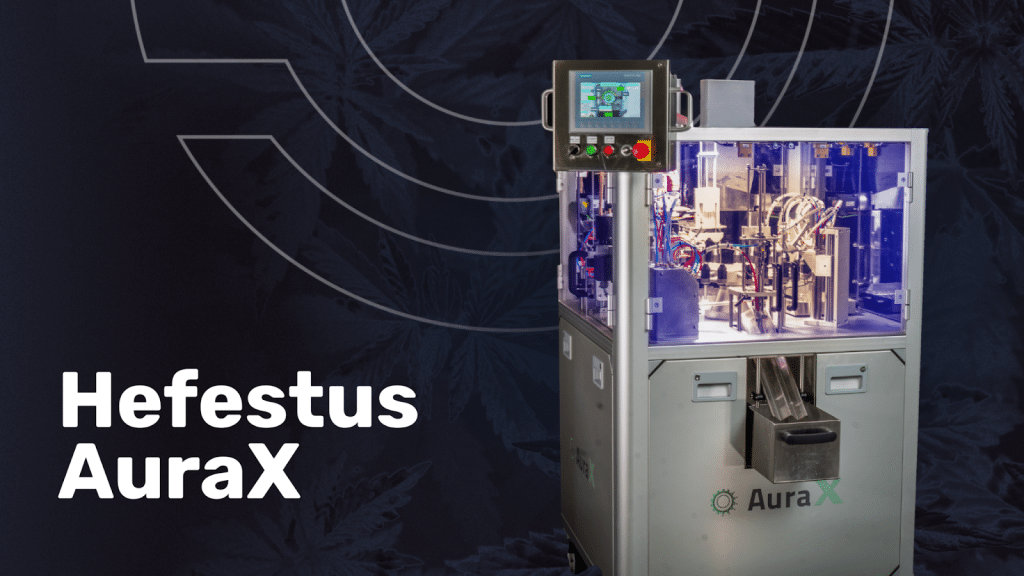
The Hefestus AuraX is a fully automated cone-filling system for high-volume operators that need speed, precision, and dependable uptime. With a single operator it produces more than 2,000 cones per hour while maintaining tight weight control and uniform packs.
The platform supports all common cone sizes and runs infused material reliably, including wax, live resin, kief, and diamonds. Optional modules such as Weight Checker for inline validation and AutoTube for automated tubing extend throughput and reduce rework.
Each unit ships with on-site training, SOP creation, and 24/7 global support, giving your team a rapid path to stable production and scalable cone output. If you’re looking to scale your cone production, capture new markets, and improve your profit margins, the AuraX is the best overall cone filling machine available on the market today.
Pros:
- High Throughput: 2,000+ cones per hour with one operator.
- Infusion Ready: Consistent performance with standard and infused cones up to 2.5 g.
- Full Support: On-site training, SOPs, and 24/7 assistance included.
Cons:
- Premium Cost: Higher price than mid-tier systems.
- Larger Footprint: Needs adequate floor space.
- Best for Scale: Overbuilt for very small producers.
2. FLEXPAK MAX
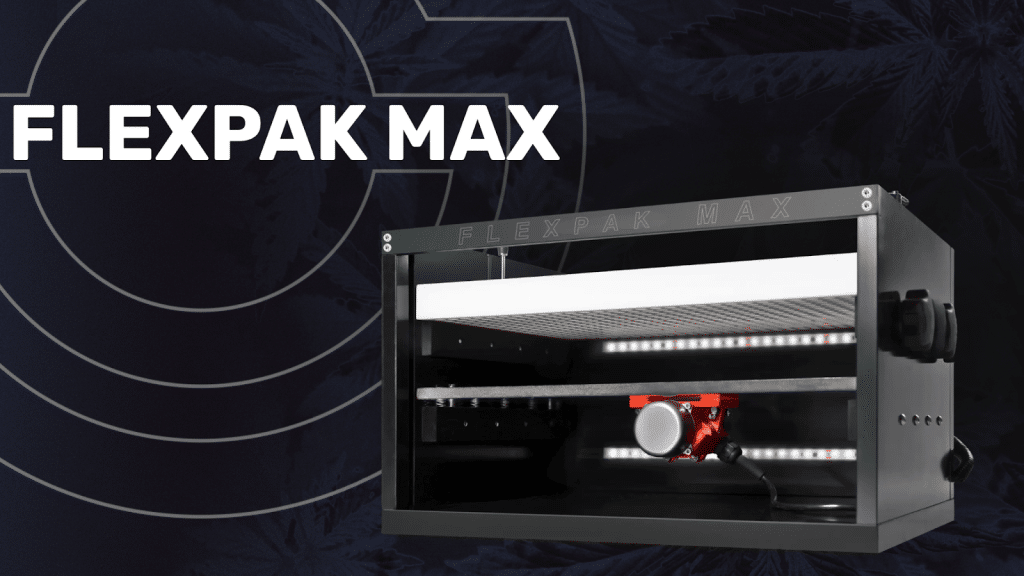
The FlexPak MAX is a U.S.-engineered cone-only system that prioritizes speed, compact design, and straightforward operation. It integrates filling, vibration compaction, and twist-and-trim in a modular package suited to mid-size facilities.
Depending on configuration and staffing, real-world output ranges roughly 2,000 to 3,000 cones per hour, enabling efficient daily runs without complex changeovers. Built from robust materials, the MAX favors durability and predictable cycles, though it is less efficient with heavy extracts.
For brands standardizing cone SKUs and seeking strong cost-to-volume performance, it offers a clear path to higher throughput without moving to a multi-format platform.
Pros:
- High Cone Output: Approximately 2,000–3,000 cones per hour.
- Compact System: Fits easily in small to mid-size facilities.
- Integrated Workflow: Filling, compaction, and closing combined.
Cons:
- Cone-Only: No support for blunts or straight rolls.
- Infusion Limits: Less suited to heavy concentrate loads.
- ROI Ceiling: May be outgrown as formats expand.
3. Canapa JuanaRoll-1
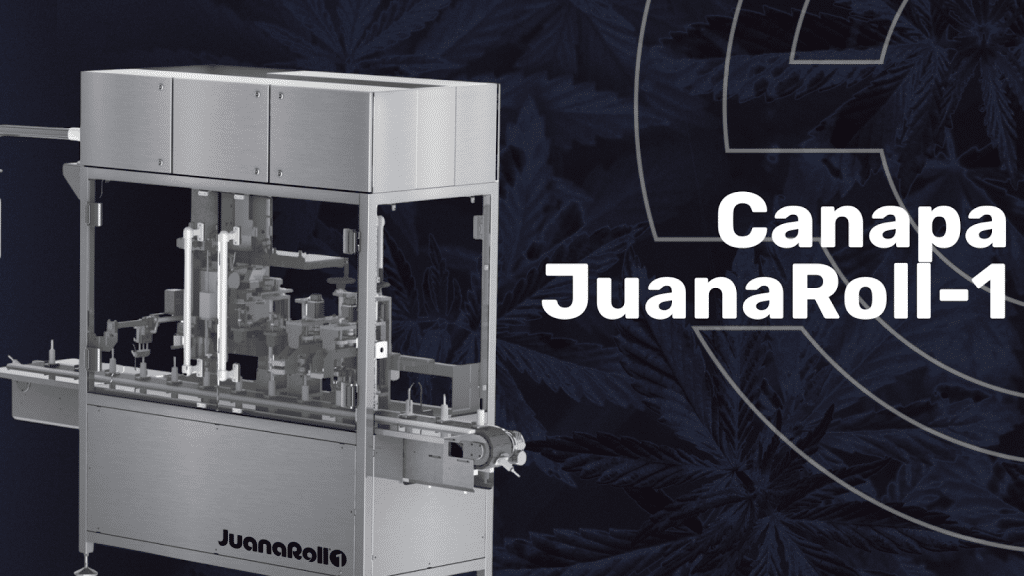
The Canapa JuanaRoll-1 is a compact, fully automated cone solution for operations moving from manual to controlled automation. It manages dosing, filling, compaction, twisting, and trimming inside an enclosed architecture that emphasizes weight accuracy and repeatability.
Rated up to about 750 cones per hour, it supports a practical range of cone sizes from roughly 0.25g to 2g, making it a fit for quality-focused producers at modest volumes. The precision weight cell minimizes giveback and waste, while the rotary handling and finishing tools keep packs even.
For facilities prioritizing consistency over maximum speed, the JuanaRoll-1 offers a measured, reliable step into automated cone production.
Pros:
- Complete Automation: Weighing, filling, and finishing in one system.
- Accurate Weights: High-precision control reduces variance.
- Small Footprint: Suitable for constrained spaces.
Cons:
- Lower Throughput: Caps around 750 cones per hour.
- Cone-Only: No support for other pre-roll formats.
- Limited Scale: Geared to small and mid-size production.
4. Accelerant PRO2
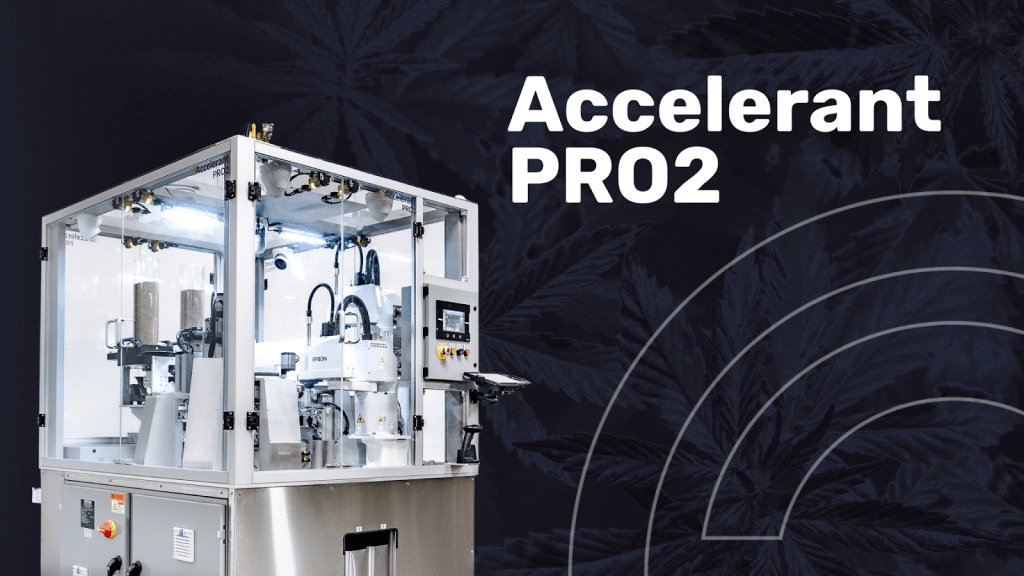
The Accelerant PRO2 provides a practical entry to cone automation through a pay-per-joint model that removes upfront equipment spend. Capable of producing 1,500 or more cones per hour, it helps brands stabilize output while preserving cash for growth.
Installation, training, and monitoring are bundled, giving teams a quick path to steady runs and predictable cone quality. The tradeoff appears at higher volumes, where per-joint fees compress margins compared to ownership.
For producers ramping toward mid-range volume, the model can bridge the gap from manual to automated cones while keeping options open for a future transition to a fully owned platform.
Pros:
- No Upfront Capex: Pay-per-joint lowers barriers to adoption.
- Solid Output: 1,500+ cones per hour.
- Service Included: Training, maintenance, and monitoring.
Cons:
- Rising Costs: Fees scale with volume.
- No Asset Ownership: Limits long-term ROI.
- Transitional Fit: Less profitable at higher throughput.
5. King Kone
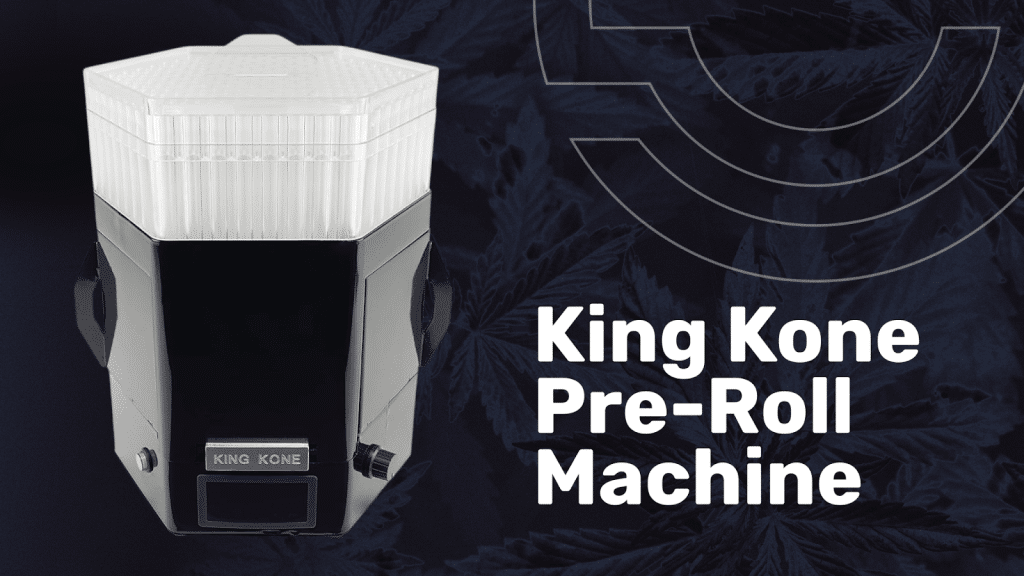
The King Kone is a budget-friendly, semi-automated cone filler designed for early-stage teams moving off hand-packing. Running on standard 110 V power, it supports common cone sizes from 84 to 109 mm and allows one operator to fill multiple cones in parallel.
The system reduces manual strain and speeds batching, making it useful for testing demand and streamlining basic workflows. Output and pack consistency remain dependent on operator technique, so results vary more than with full automation.
If you have a small or start-up operation and want a manageable first step into cone production, it offers accessible gains before upgrading to higher-throughput systems.
Pros:
- Low-Cost Entry: Affordable upgrade from hand-filling.
- Easy Setup: Single-operator workflow on 110 V.
- Flexible Sizes: Supports common cone lengths.
Cons:
- Manual Reliance: Operator involvement at each stage.
- Variable Consistency: Less uniform than automated systems.
- Limited Throughput: Suited to sub-2,000–3,000 cones per month.
What to Look For in a Cone-Filling Machine
Choosing the right cone-filling machine depends on your production goals, desired level of automation, and long-term growth plan. Whether you’re a start-up testing demand or a large-scale operator scaling output, these are the key factors to evaluate before investing.
Production Capacity and Labor Efficiency
The first metric to consider is how many cones your system can fill per hour with one operator. True automation should reduce labor while increasing consistency and output.
High-performance machines like the Hefestus AuraX can produce over 2,000 cones per hour with a single operator, making them ideal for large-scale production. Systems such as the FlexPak MAX achieve similar throughput for cone-only workflows, while compact models like the Canapa JuanaRoll-1 or King Kone provide accessible entry points for smaller operations.
Lower-cost or semi-automated systems may seem appealing early on, but labor costs and downtime often erase those savings as demand grows.
Cone Compatibility and SKU Flexibility
Cone size compatibility is a defining feature of any good cone-filling machine. The best systems allow quick adjustments between different sizes and fill weights without major retooling.
If your focus is standard cone production, machines like the FlexPak MAX and JuanaRoll-1 are built specifically for that workflow. For greater SKU flexibility – such as running infused cones or larger formats – the AuraX offers broad compatibility up to 2.5 grams and handles sticky, resinous material without slowdown.
Being able to diversify SKUs from a single platform helps you capture new customers and respond to changing market demand without buying multiple machines.
Reliability and Technical Support
Consistent uptime directly affects profitability. A reliable cone-filling machine should come with robust support, training, and fast access to technicians.
Hefestus provides a leading example, offering a week of on-site training, SOP development, and 24/7 technical support from U.S. and Israeli teams. In comparison, systems like the FlexPak MAX or Accelerant PRO2 offer domestic installation and service programs that get operators started quickly, though long-term support levels vary.
Strong training and accessible service can mean the difference between smooth scaling and costly production delays.
ROI and Total Cost of Ownership
Evaluating true ROI means looking beyond the purchase price. Machines that maintain high throughput with minimal downtime usually deliver faster payback periods and stronger long-term margins.
For example, while the Accelerant PRO2 uses a pay-per-joint model that eliminates upfront costs, the per-unit fees add up as volume grows. Meanwhile, owning a high-efficiency system like the AuraX or FlexPak MAX typically reduces long-term costs by cutting labor and downtime.
Financing and Accessibility
Capital availability often determines how quickly a business can automate. Flexible financing options help bridge that gap by spreading out the investment.
Hefestus, for instance, offers structured financing to help producers scale without straining cash flow. Pay-per-joint systems like Accelerant’s PRO2 make sense for start-ups needing to automate immediately, but ownership ultimately provides stronger cost control and equity.
Conclusion: Choosing the Best Cone-Filling Machine for Your Operation
For large-scale producers seeking maximum output and versatility, the Hefestus AuraX remains the most advanced and scalable cone-filling machine available.
If you’re focused solely on cone formats and need a cost-effective, high-throughput option, the FlexPak MAX offers exceptional speed and simplicity. Smaller operations or emerging brands may prefer starting with the Canapa JuanaRoll-1 or King Kone to test demand before committing to a fully automated system.
Ultimately, the right cone-filling machine depends on your production volume, facility size, and long-term growth plans. By weighing these factors carefully, you can invest in a system that not only meets your current needs but also scales with your business.