Table of Contents
Explore four niche cannabis travel spots from California farms to Sevilla clubs, Niagara wine country, and Chiang Mai wellness retreats.
Most cannabis travel pieces recycle the same names: Amsterdam, Denver, Vancouver, Barcelona. Once you have done those circuits, another “best legal weed cities” list feels like going back to the same theme park in a different year. For seasoned consumers, the more interesting question is: where do you go when you already understand dosing, legality, and dispensaries, and you want culture, depth, and a distinct sense of place?
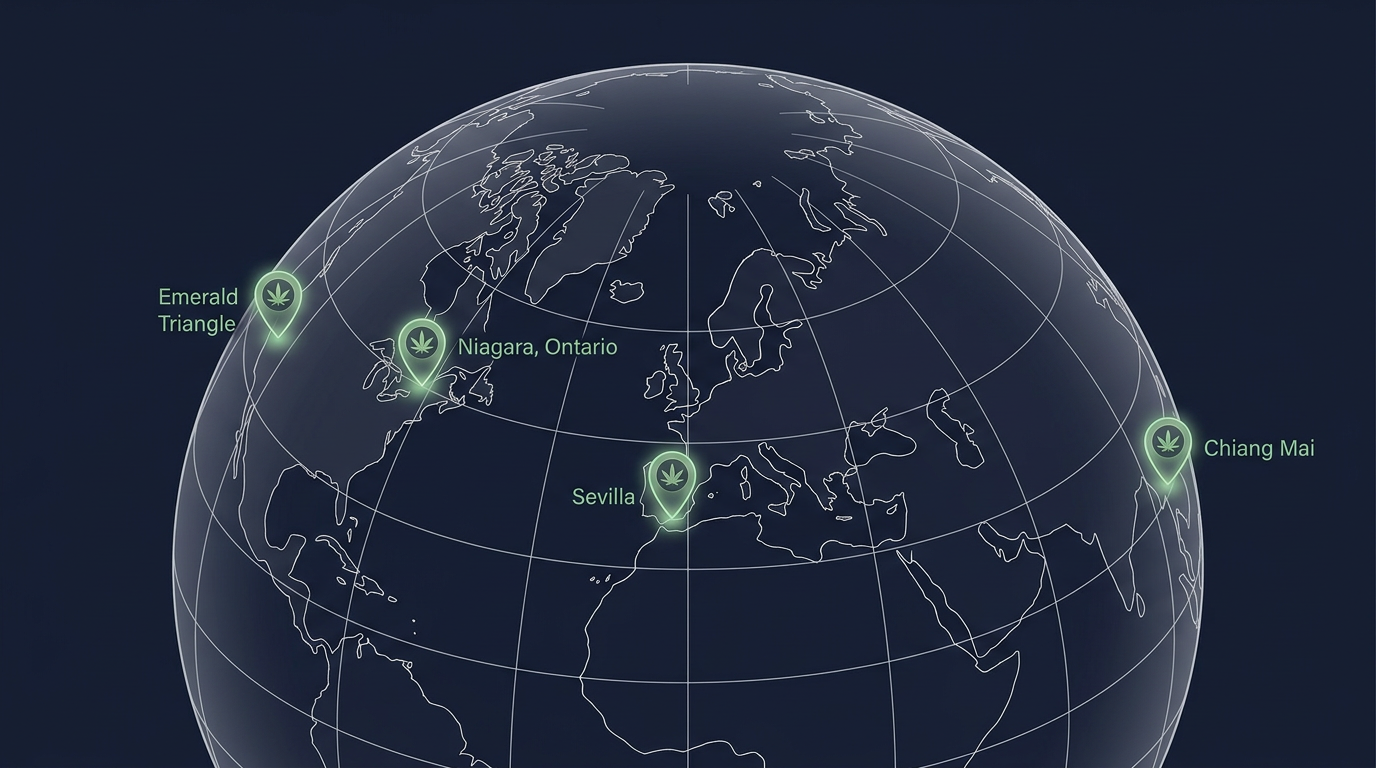
This feature looks past the obvious hotspots to four niche micro-destinations in the United States, Canada, Spain, and Thailand. Think production regions, club cultures, and wellness hubs where cannabis is a thread woven into local life, not the entire attraction.
Cannabis Travel like a connoisseur, not a beginner
The biggest mindset shift for advanced travelers is that you are no longer hunting for access; you are hunting for context. Instead of asking “Where can I buy?” you are asking:
- How did the local scene evolve?
- Who actually benefits from cannabis tourism here?
- What products, rituals, or spaces are unique to this region?
That changes what a good trip looks like. You are not collecting dispensary receipts; you are mapping out growers, glassblowers, chefs, organizers, and the venues that connect them. The reward is less about volume and more about insight. You start to see why a certain hash texture, farming style, or club model could only have grown up in this particular place.
Trinity and Southern Humboldt, California: The Emerald Triangle’s living myth
If you are going to pick one United States micro-destination for serious heads, skip another big city and head straight to the source: Trinity and southern Humboldt counties in Northern California. This is the heart of the Emerald Triangle, the region that has quietly supplied generations of American consumers and shaped much of the modern cannabis gene pool.
Out here, the landscape is the story. Narrow roads wind through redwoods and river valleys toward hillside farms where sun-grown plants soak up real weather instead of warehouse lights. Licensed tours and small local operators offer a glimpse into what “terroir” means in cannabis, and how soil, microclimate, and farming philosophy affect aroma and effect.
A classic day might look like this. In the morning you drive up into the hills for a pre-booked farm visit, walking rows with the grower, talking genetics and soil instead of just THC percentages. Afterward you head back down to the river for a low key session and a swim or picnic, then stop at a reputable local shop to pick up flower or hash from the farms you just saw. Nightfall is for stargazing from a cabin porch or campsite, not bar hopping. This is slow travel: plant, landscape, and conversation.
Late summer through fall is the sweet spot, especially around harvest, when fields are full and the air smells like drying rooms. Spring and early fall also work if you want better road conditions and fewer fire worries.
Niagara, Ontario: Wine and weed on the edge of the falls
Canada legalized nationwide years ago, but formal cannabis tourism has lagged behind the law. One of the more interesting regions quietly taking shape is Ontario’s Niagara area: St. Catharines, the lakefront, and the wine routes that fan out toward Niagara on the Lake and the falls.
Here, the draw is combination rather than intensity. You might start your day with brunch in town, then drop into a good shop to grab a few grams or a cartridge for the day. Nothing heavy, just enough to pair with scenery and meals. From there, you are off to wineries with a sober driver, drifting between tastings, vineyard walks, and cheese plates while keeping your cannabis use light and spaced out.
In the evening, you can time a private session around sunset at the falls or along the lake, taking advantage of the region’s natural drama, then head back into town for dinner and a quiet night. The appeal is less “weed vacation” and more “adult weekend away with weed integrated thoughtfully,” especially in late spring through early fall, when patios, vines, and lake breezes are all doing their thing.
One non-negotiable rule here is that you respect the borders. You may be able to buy legally, but you still cannot carry product across the United States and Canada line, no matter how tempting that might be.
Sevilla, Spain: Flamenco, plazas, and a quieter club scene
Barcelona is the face of Spain’s cannabis social clubs, but its scene is crowded, heavily touristed, and under steady political pressure. Sevilla, in Andalusia, offers a slower, more traditional setting where a smaller number of clubs operate alongside orange trees, tilework, and late-night plazas.
Spain’s club model sits in a very specific gray zone: private associations for members, built around shared consumption rather than simple sales. For an experienced traveler, that is part of the appeal. You are not walking into a shop; you are being invited into someone else’s community space, with its own rules, politics, and rhythm.
A good day in Sevilla starts completely sober. You eat toast and tomato and drink coffee at a bar, then wander through the old town and cathedral, and maybe stop in a museum or park. Only later, with a proper invitation or membership arranged in advance, do you step into a club. Inside, the energy feels more like a living room than a lounge, with people talking, playing games, and watching football. The move is to keep doses modest, respect all house rules, and remember this is not a backdrop for social media.
At night, you might weave in a flamenco show, a slow tapas crawl, and a walk along the river. Spring and fall are ideal, when the streets are alive but the heat has not turned oppressive. Public consumption remains prohibited, so everything happens in private spaces by design.
Chiang Mai, Thailand: Cannabis as a wellness tool
Thailand’s recent cannabis story has been a whiplash ride: decriminalization, a boom in shops and tourist use, and then a political pivot toward tighter control and a more medical frame. For a niche traveler, that makes Chiang Mai particularly interesting. It is a city already known for yoga, meditation, massage, and temple culture, now cautiously integrating cannabis into certain wellness offerings.
Here, the play is not to chase the loosest rules, but to look for thoughtful, compliant experiences. That might mean spas using cannabis infused oils in Thai massage, wellness retreats that incorporate low dose products into relaxation or sleep protocols, and cafes that treat cannabis as one option among many instead of the main attraction. All of this unfolds against a backdrop of temples, mountains, and night markets.
A respectful day might look like this. In the morning you visit the major temples and viewpoints completely sober, both out of respect and because public use is heavily frowned on. In the afternoon, you head to a reputable spa that clearly explains what is legal and what is not, and opt for a massage or treatment with infused oil. After a rest, you have a small, private session back at your guesthouse and then drift through a night market for noodles, fruit, and crafts.
The cool, dry season, roughly November through February, is the sweet spot, with bearable temperatures and clearer skies. The underlying rule is simple: treat cannabis as a supplement to a wellness trip, not a loophole to exploit, and keep an eye on fast-changing regulations.
Picking your next niche trip
Once you are traveling as a connoisseur and not a beginner, you can think of destinations in a few simple categories. Production regions like the Emerald Triangle are for people who care about terroir, genetics, and farm culture. Hybrid regions like Niagara work when you want cannabis folded into an existing wine and water landscape. Club ecosystems like Sevilla appeal if you are curious about how communities build private consumption spaces in a gray zone. Wellness hubs like Chiang Mai are for travelers who want to see cannabis show up in massage rooms and retreat schedules instead of just on shelves.
The sweet spot is often where those categories overlap: a farm region with an arts scene, a club city with serious food, or a wellness hub where cannabis is just one of several tools on offer. For experienced consumers, that is where the trips start feeling less like “weed vacations” and more like real travel, where the plant deepens your experience of a place instead of distracting you from it.