Table of Contents
As longer distribution windows and tighter margins put new pressure on post-harvest quality, Calyx Containers and the Cannabis Research Coalition (CRC) are launching a formal research partnership to move curing and long-term cannabis storage from myth to measurable science. Calyx is committing a minimum of $50,000 to fund independent studies aimed at establishing benchmarks for cannabinoid stability, terpene preservation, and packaging performance over extended holding periods.
Operator Impact at a Glance
- Independent, packaging-specific data on long-term storage is finally being funded.
- First studies will track potency, terpenes, moisture and headspace gasses over 60–180 days.
- Findings are intended to support data-driven SOPs, not just validate a single product.
- Goal: protect cultivation value through distribution, not just at COA day.

“Cannabis is entering an era where standards will be defined by measured outcomes,” said Alex Gonzalez, President and Co-Founder of Calyx Containers. “This partnership shifts the industry from guesswork to data—from legacy myths to repeatable mechanics that operators can rely on.”
Cannabis Storage Performance Is a Make-or-Break Variable
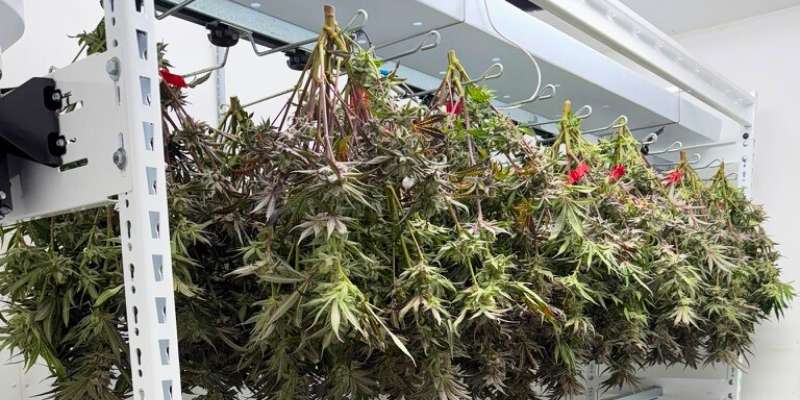
In today’s environment, flower is expected to maintain potency, aroma and visual appeal well beyond the initial COA date as it travels through increasingly complex distribution cycles. Yet many operators still lean on inherited rules of thumb or vendor claims when deciding how to cure and store product for 60, 90, or even 180 days.
“The reality is that storage is where much of the hard-earned quality of cultivation can quietly degrade, and operators deserve real data on what different packaging approaches actually do over time,” Gonzalez explained. For operators working in tight margin conditions, incremental degradation becomes a direct hit to both wholesale value and brand equity.
Dr. Allison Justice, Co-Founder of the Cannabis Research Coalition, points to the lack of quantitative visibility into what actually happens inside sealed systems once product leaves the dry room.

“We speak confidently about curing, yet once a product enters distribution channels, very few operators are measuring what is happening inside sealed systems over 60, 90, or 180 days,” she said. “In an environment of longer distribution windows and tighter margins, incremental degradation translates directly to lost potency, altered aroma profiles, and diminished wholesale value.”
Inside the Calyx–CRC Study Design
Under the new agreement, Calyx is providing at least $50,000 in funding through an annual research stipend and direct support for CRC-led, operator-focused studies. The first planned project will focus on long-term storage optimization, including a controlled look at permeable and modified-atmosphere-style packaging, categories that have seen big claims but limited independent validation.
“A primary goal is to expand beyond curing to longer-term storage, because we’re seeing big claims in the market that permeable MAP-style packaging is ‘ideal’ for extended holding periods,” Gonzalez noted. “We plan to evaluate outcomes at the cannabinoid and terpene level, because that is ultimately what determines product performance, consumer experience, and what market value is willing to be paid for products.”
The study will compare packaging formats across extended holding periods using a multi-metric quality panel that includes:
- Cannabinoid potency stability
- Terpene retention and volatility
- Moisture and water-activity behavior
- Color change and visible degradation
- Headspace gas composition over time
“One of the most under-quantified variables in post-harvest handling is the dynamic equilibrium between water activity, headspace composition, and chemical degradation kinetics during extended storage,” Justice said. “Terpene volatility, oxidative pathways, and slow cannabinoid conversion reactions are not theoretical concerns; they are measurable processes influenced by oxygen transmission rates, moisture migration, and packaging permeability.”
From Habit-Driven Choices to Data-Driven SOPs
Today, many post-harvest decisions are driven by habit or what appears to work in a single facility, even though small differences in storage conditions and packaging can quietly change outcomes over time. Gonzalez sees the research as an opportunity to replace that patchwork with shared, data-backed reference points.
“Today, post-harvest decisions are often driven by habit, marketing claims, or what seems to work in one facility, even though small differences in storage conditions and packaging can quietly change outcomes over time,” he said. “We want to help operators make clearer choices with confidence, standardize SOPs across facilities, and reduce avoidable loss of quality and value.”
Justice expects the work to directly inform practical benchmarks. “I anticipate this work contributing to measurable storage benchmarks grounded in chemical stability rather than convention,” she said. “For example, we should define practical internal moisture ranges that reduce both microbial risk and terpene loss, while also understanding how oxygen exposure affects cannabinoid stability over time.”
By tracking terpene retention and potency changes across different packaging systems, CRC and Calyx expect to help operators build more reliable expectations around shelf life instead of relying on visual inspection or anecdotal experience. “Ultimately, this allows post-harvest protocols to be designed around clear quality targets, not just appearance or tradition,” Justice added. “As distribution timelines extend, preservation needs to be treated as a managed variable within the production system, monitored and optimized, rather than an afterthought.”
What This Could Mean for Cultivators, Brands and Consumers
For cultivators, the research promises a clearer path to dialing in cure and storage SOPs that protect both quality and weight from harvest through distribution. For brands, more stable potency and terpene profiles over time can translate into more consistent product performance on shelf and stronger consumer trust.
“For brands, that translates into more consistent product performance on shelf and stronger consumer trust,” Gonzalez said. “And for consumers, it means a better, more reliable experience because the quality created during cultivation is preserved through curing and long-term storage rather than degrading in ways no one measured.”
Over the next six to twelve months, Calyx and CRC will finalize study protocols and begin controlled testing, with plans to share results in formats that are accessible to operators, brands and regulators. If the findings demonstrate repeatable value, both organizations anticipate expanding the scope to additional post-harvest variables, helping the industry move steadily toward standards grounded in measured performance rather than assumption.